More Than a Trend: The Real Business Case for Height-Adjustable Desks
The concept of the static, 9-to-5 desk is officially dead. In the modern workspace, adaptability isn’t just about software, it’s about the physical furniture. Once viewed as a luxury wellness perk, height-adjustable desks are now a requirement for high-performing, healthy corporate environments. Investing in sit-to-stand capabilities delivers tangible corporate returns by boosting employee productivity, mitigating workplace injuries, and positioning a company as an employer of choice.
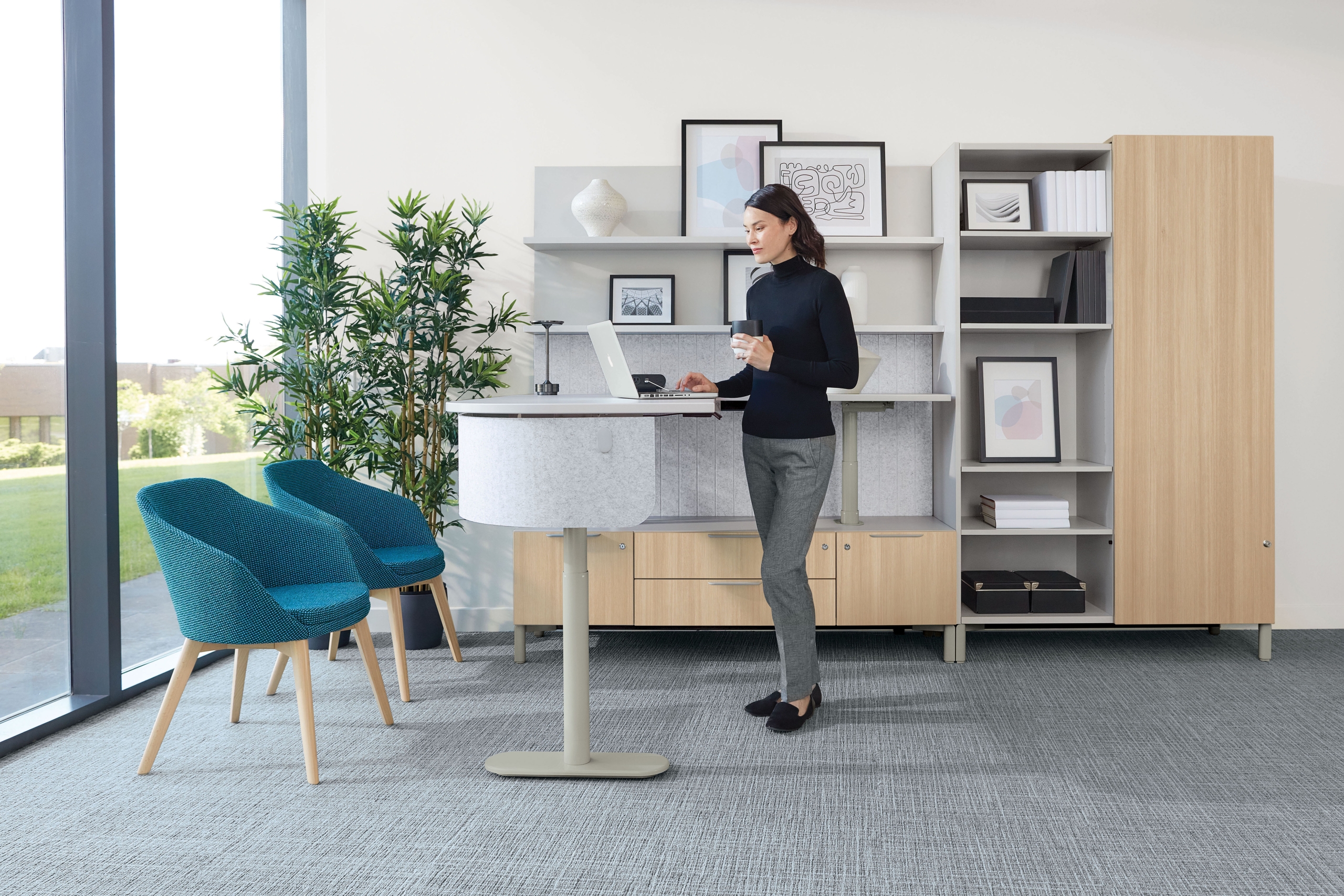
Ergonomics & Health: Reducing the Cost of Absenteeism
- The Problem: Chronic sitting is linked to musculoskeletal disorders (MSDs), lower back pain, and repetitive strain injuries. These aren’t just health issues, they are costly worker’s comp claims and lost productivity days.
- The Solution: Alternating between sitting and standing throughout the day re-aligns the spine, improves blood circulation, and reduces muscular fatigue.
According to the Human Factors and Ergonomics Society, ergonomic interventions like adjustable desks can reduce musculoskeletal problems by up to 57%, directly lowering health-related absenteeism.
Energy, Focus, and the “Post-Lunch Slump”
- The Kinetic Connection: Standing increases blood flow and oxygenation to the brain. When employees hit that inevitable 2:00 PM energy crash, switching to a standing position physically re-energizes the body.
- Cognitive Performance: Studies show that sit-to-stand environments can boost productivity by 40-50% as employees experience higher concentration levels, sharper focus, and less mental fatigue over long afternoons.
Your team’s afternoon slump isn’t a lack of focus, it’s a lack of movement. A height-adjustable workspace changes the energy of the entire office.
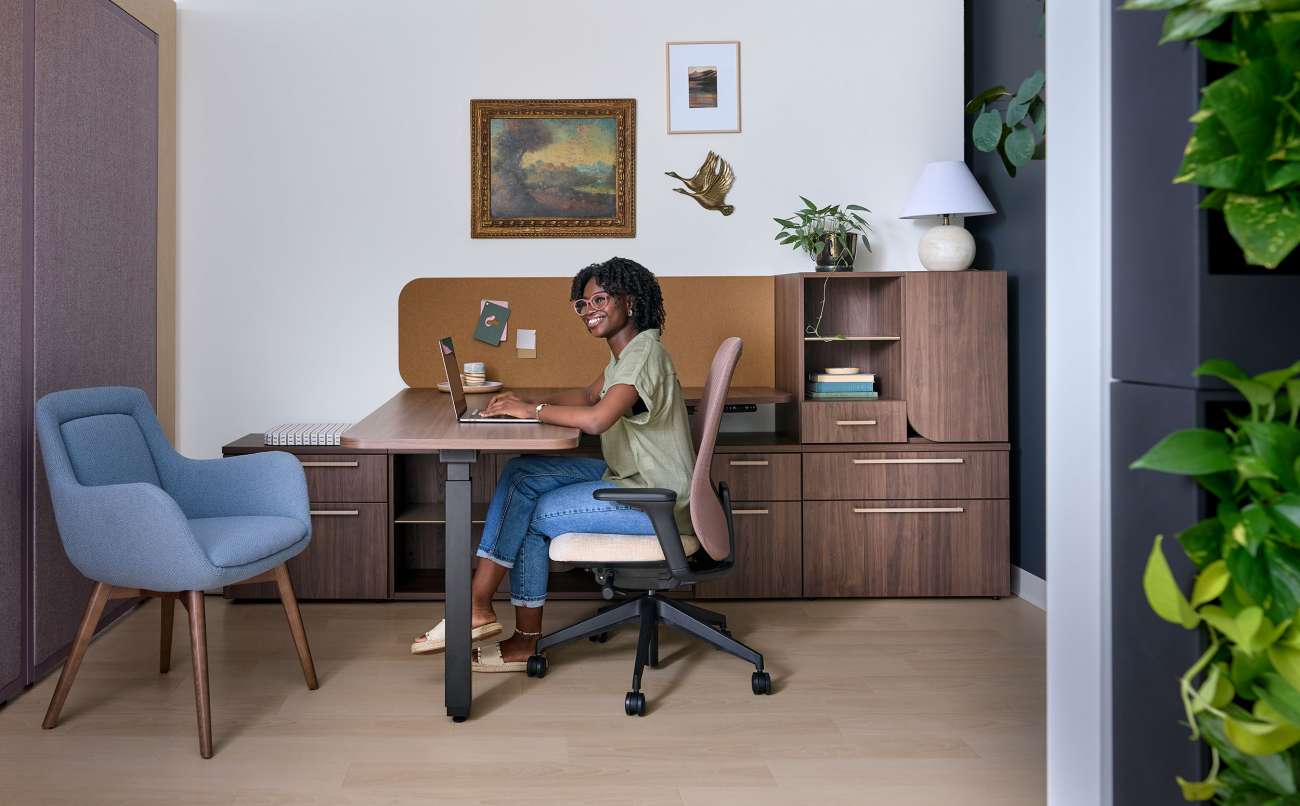
Talent Attraction & Retention
- The Modern Worker’s Expectations: Gen Z and Millennial workers view workplace wellness as a baseline requirement, not a bonus. A sea of static, outdated desks screams “stagnant corporate culture.”
- Demonstrating Value: Outfitting an office with sleek, intuitive sit-to-stand desks visually demonstrates that a company actively invests in the day-to-day well-being of its workforce. It acts as a powerful passive recruiting tool during office tours for prospective top-tier talent.
Universal Design & Shared Workspaces
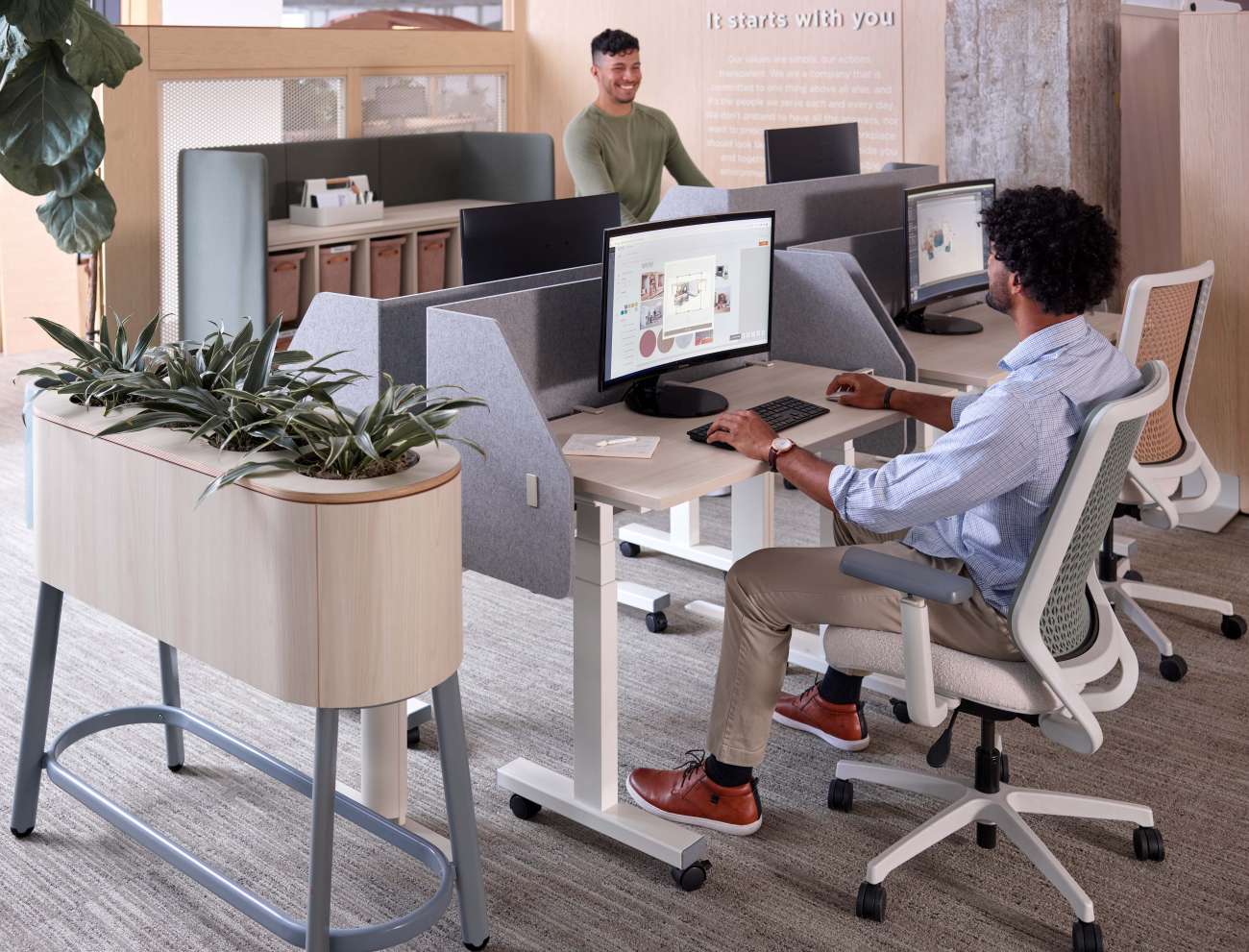
- One Size Does Not Fit All: In a hybrid office or a space with shared workstations (“hot-desking”), a fixed 30-inch desk is inherently uncomfortable for a significant percentage of employees (either too high or too low).
- The Inclusive Workplace: Height-adjustable desks allow any user—regardless of height or physical capability—to instantly customize their workspace to their exact ergonomic needs at the touch of a programmable button. This makes open-plan and agile offices vastly more functional.
Seamless Aesthetic Integration
- Moving Beyond the “Industrial/Tech” Look: Early sit-to-stand desks looked clunky, with exposed wires and heavy, black metal frames that ruined a cohesive office design.
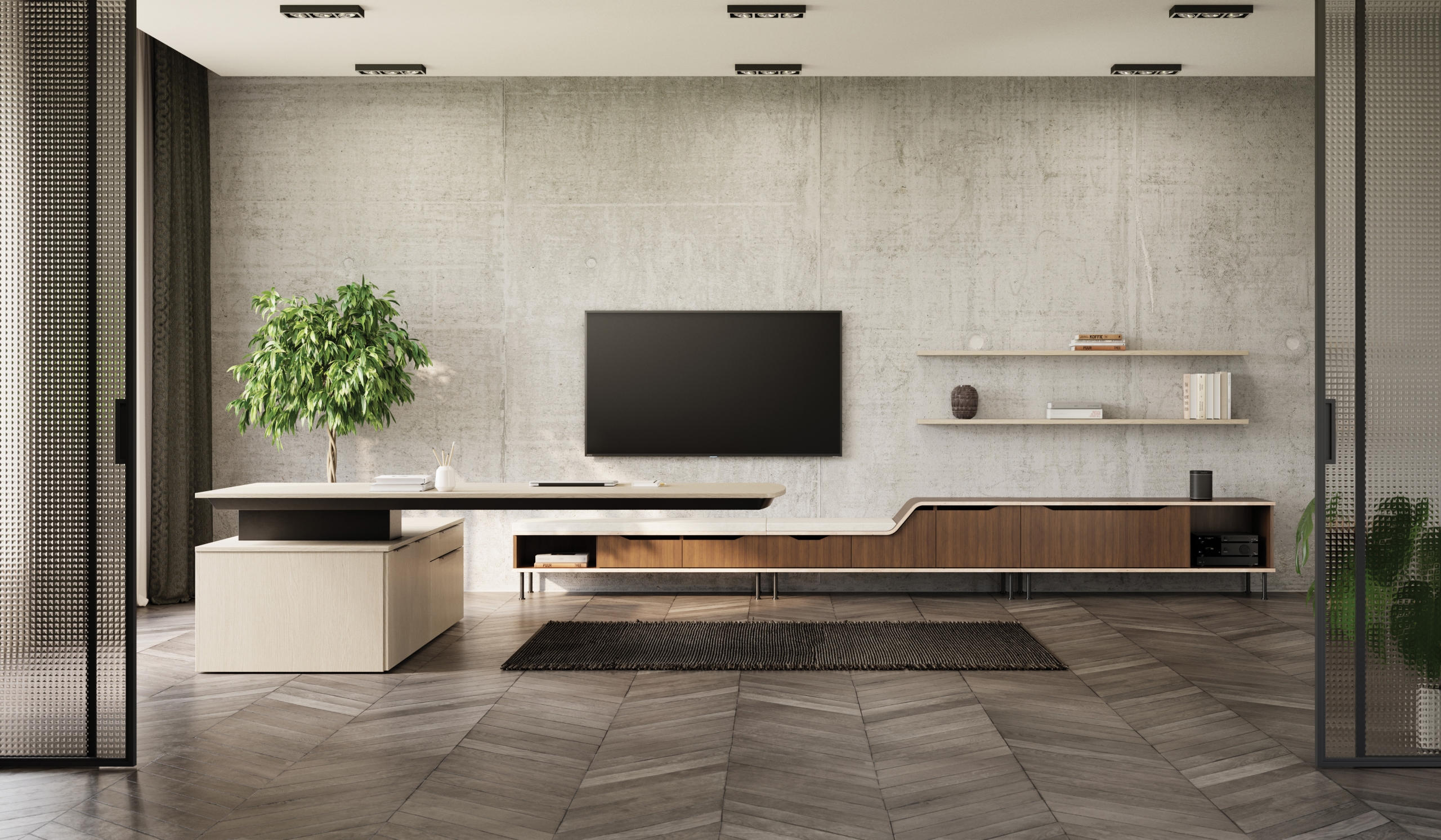
- Modern Executive Styling: As seen in modern office layouts, today’s height-adjustable lines feature completely hidden wire management, integrated under-desk power, and premium wood or laminate surfaces that flow seamlessly into matching credenzas, casegoods, and conference tables.
Height-adjustable desks aren’t just furniture; they are a strategic asset that impacts a business’s health, culture, and output.
At Phelan’s Interiors, we don’t just specify desks, we engineer commercial environments that work as hard as your team does. Let’s upgrade your office footprint for the modern workforce.